How to Clean Metal Chips in Your Workshop: Techniques and Tools
Best techniques and equipment for metal chip cleaning in machine shops and foundries.
The Chip Problem
Machining operations produce chips continuously. Let them pile up on the floor and you're looking at injury risks, damaged finished parts, and slower, more frustrating work.
Here's what actually works to keep them under control.
Why Effective Cleaning Matters
Workplace Safety
Metal chips scattered on the floor pose a serious injury risk. They can cause:
- Slips and falls
- Cuts and foot injuries (even through safety boots)
- Machinery damage if they get into moving parts
Production Efficiency
A clean work environment significantly improves productivity:
- Reduces time spent searching for tools
- Prevents damage to finished parts
- Facilitates material handling
Product Quality
Chips can compromise machining quality if not removed promptly, scratching finished surfaces or interfering with measurements.
Types of Chips and Cleaning Approaches
Long, Stringy Chips
Typical of turning ductile materials like aluminum and mild steel. They require:
- Brooms with harmonic steel bristles to wrap them up
- Gripper or "octopus" system for effective collection
Short, Fragmented Chips
Result from milling and machining brittle materials. For these:
- Standard fork attachment brooms are ideal
- The integrated blade helps collect even the smallest pieces
Hot Chips
In foundries and heavy machining, chips may still be hot. It's essential to:
- Use manual brooms with heat-resistant harmonic steel
- Wait for cooling before mechanized collection
Recommended Equipment
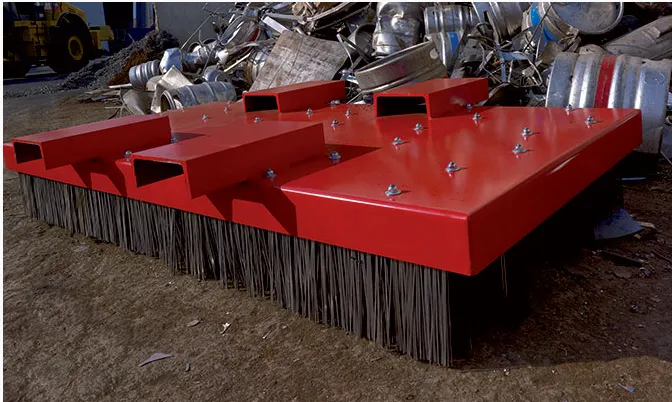
Fork Attachment Brooms
The most efficient solution for medium and large workshops. Fork attachment brooms of 2 or 3 meters allow you to:
- Cover large areas quickly
- Use the forklift already present in the workshop
- Collect large quantities of chips in a single pass
Gripper System Brooms
Ideal for long, stringy chips that tend to tangle. The grippers:
- Grab chips without scattering them
- Facilitate transfer to collection bins
- Reduce the need for manual intervention
Ultra-Light Manual Brooms
For localized cleaning and areas difficult to reach with mechanical equipment:
- Reduced weight to minimize operator fatigue
- Wear-resistant harmonic steel bristles
- Ideal for cleaning around machinery
Best Practices for Daily Cleaning
1. Schedule Regular Cleaning
Don't wait for chips to accumulate. Establish:
- Quick cleaning at the end of each shift
- Weekly deep cleaning
- Monthly equipment maintenance
2. Zone Your Workshop
Divide the workshop into zones with clear responsibilities:
- Each operator cleans their own station
- Dedicated team for common areas
- Responsibility rotation
3. Use Appropriate Bins
Collected chips must be stored properly:
- Sturdy metal bins for transport
- Separation by material type (if required for recycling)
- Strategic positioning to minimize travel distances
What to Do
Set up a cleaning routine (end of shift, minimum). Use the right tool for your chip type. Do the math: how much time are you losing now? How much would you save?
Send us a photo of the chips you produce — we'll tell you which broom collects them best.
Related articles
Industrial Brooms for Construction Sites: Selection and Use
Best industrial brooms for construction sites. How to choose the right equipment for site cleaning, demolition work, and road construction.
Industrial Cleaning Equipment: What to Choose for Your Business
Industrial cleaning equipment: brooms, sweepers, collection systems. How to choose based on your industry and needs.